
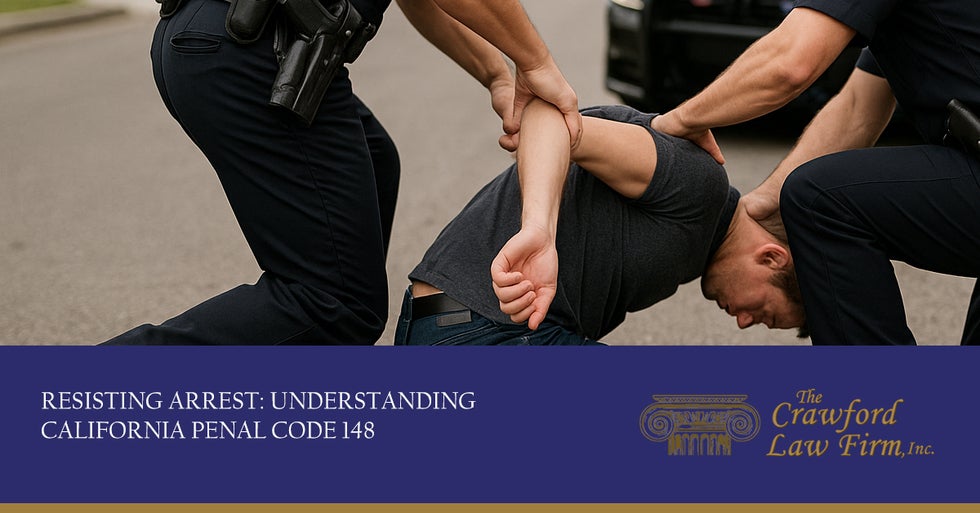
After you have been arrested, you will receive a hearing where a judge will inform you of the charges against you. Often, this list will include a charge of resisting arrest. In some jurisdictions, it often feels like almost every arrest results in a charge of resisting arrest.
Due to the way this crime is defined, it is surprisingly easy for a prosecutor to pursue this charge. However, that doesn't necessarily mean that the charge is justified. If you are facing this charge in California, understanding the penal code can help you defend against it.
What Penal Code 148 Says
Resisting arrest is defined by Penal Code 148. According to this code, you are guilty of resisting arrest if you:
- Obstruct or delay an emergency services technician or officer of the law
- Willfully perform this act while that individual is performing their job or duty
- Know or reasonably should know that the person is an officer or emergency services technician who is doing their job
If you meet all three of these criteria, you can be sentenced to up to a year in county jail, a fine of up to $10,000, or both.
Definitions That Apply to This Regulation
The following definitions affect this regulation.
Delayed or Obstructed
You must have done something that could have prevented the officer or technician from performing their responsibilities. Thus, even a failed attempt to prevent these activities counts.
Willfully
You have to have made a conscious decision to break the law. Acting without intent or accidentally does not qualify as resisting arrest.
Officer
This law doesn't just cover the actions of police officers. It also applies to peace officers and public officers.
Lawful Responsibilities
You must have interfered with the individual's lawful performance of their duties based on their position. This means that if the individual wasn't performing lawful duties or was performing duties not related to their position, a resisting arrest charge wouldn't apply.
Furthermore, this covers all lawful responsibilities. You can resist arrest by delaying or obstructing the arrest of yourself or of any other individual.
Reasonably Should Know
If a reasonable person would have known that the individual you interfered with was an officer or emergency services technician, you are guilty even if you claim you were unaware.
Defenses Against Resisting Arrest
To defend against this charge, you need to show that you don't meet one of the criteria. The following are common defenses.
The Officer Wasn't Acting Lawfully
If an officer attempts to arrest or detain you unlawfully, you are not obligated to submit to that arrest. You may flee or refuse to participate. However, this defense only works if you can prove that the arrest was unlawful and the officer should have known it.
For example, it is illegal in California for an officer to detain someone simply because of their race. If you are detained due to your race, you may walk away from the encounter, and a charge of resisting arrest would not be appropriate.
You Didn't Act Willfully
Police may occasionally mistake unintentional resistance for intentional resistance. For example, if you are deaf and a police officer attempts to detain you verbally, you may not even be aware that they gave you a lawful order. The arresting officer might throw in a charge of resisting arrest if you walked away after you were ordered to stop.
However, you didn't ignore their order intentionally. You just didn't hear it. The same thing can happen if you are in a loud or crowded location and an officer doesn't speak loudly enough to get your attention, even if you aren't deaf. In a situation like this, if you can provide the court with evidence that your actions were unintentional, the charge will likely be thrown out.
What to Do When Facing Resisting Arrest Charges
While resisting arrest charges are common, prosecutors usually aren't that interested in prosecuting them, especially when a defendant isn't a repeat offender. You can likely get the charges dropped or reduced to a misdemeanor if you negotiate a plea deal for all other charges.
Even if you don't, the prosecution may drop resisting arrest charges before going to trial, preferring to focus on the more meaningful charges. When facing these charges, you should discuss your options with your criminal defense lawyer. As long as you don't ignore them, you can avoid serious consequences from a resisting arrest charge.

Comments
There are no comments for this post. Be the first and Add your Comment below.
Leave a Comment