
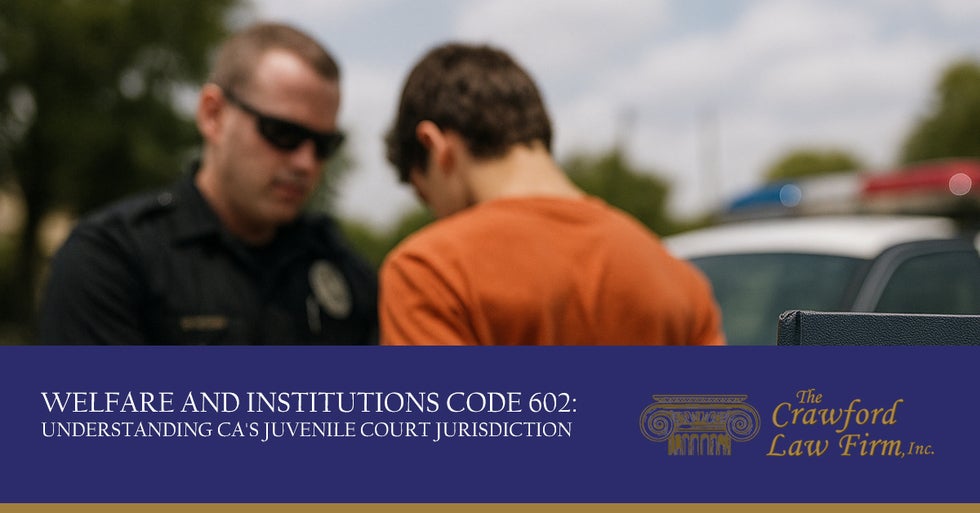
The juvenile courts were created with the goal of rehabilitation and education rather than punishment. The system is very different from adult court and can raise complex issues.
On the one hand, children often have a better chance at rehabilitation than adults. Thus, if a minor is suspected of a crime, in some situations, probation or the police may decide the matter can be handled without the court's involvement. If the offense is not serious, the right mixture of guidance and counseling may set the child on a good path.
On the other hand, a more serious case will often be prosecuted. Then, the court can exercise its power under California Welfare and Institutions Code section 602 to declare the child a ward of the court and take over primary responsibility for the minor during the time of the warship.
Juvenile Delinquency Court Functions
Juvenile courts have the ability to exercise jurisdiction over two groups of children. The first is children under 12 who have committed the following serious crimes:
- Murder
- Rape, sodomy, oral copulation, or sexual penetration involving threats, violence, force, or duress
As of 2018, juvenile courts do not have jurisdiction over children under 12 accused of any other crime.
The second group over which the court can exercise jurisdiction is children between the ages of 12 and 17 who violate any local, state, or federal criminal law. The only exceptions are for violations of curfew laws and cases involving children aged 16 or 17 who have their cases transferred to adult court.
Prosecutors prepare a petition explaining the crime the child is accused of committing. The juvenile court then conducts a hearing where the prosecution presents evidence against the child. The child's juvenile defense attorney presents all mitigating or exculpatory evidence and argues why the minor should remain out of, or be released from, custody.
Punishment for Juvenile Crimes
California law allows juvenile court judges to impose the following punishments on juveniles adjudged guilty of committing a crime:
- Payment of a fine
- Participation in a victim impact class
- Participation in a victim-offender conference
- Payment of restitution to the victim
- Contribution to a victim restitution fund
- Performance of community service
- Informal probation or parole
- Formal probation or parole
- Commitment to a detention or treatment facility
An admission to a crime or a guilty verdict by a judge, in delinquency court is not considered a conviction. Most importantly, many offenses in juvenile court can eventually be dismissed and sealed. Thus, the child will not need to report the judgment on job applications as an adult.
The juvenile court is specifically prohibited from placing the child in foster care as punishment. Moreover, the law prohibits juvenile courts from imposing punishment as retribution. In other words, the court is supposed to choose a sentence with rehabilitation and education in mind.
Adjudging a Minor a Ward of the Court
The juvenile court may declare a child a ward of the court. This means that the court takes primary responsibility of the minor away from the parent.
Some cases will not require the judge to declare the child a ward. If the juvenile is sentenced to pay a fine or perform community service, for instance, the judge can leave the parent in control of the minor.
If the court does consider wardship it must take into account the following:
- The age of the minor
- The severity of the alleged offense
- The minor's previous delinquent history
A juvenile who has been declared a ward of the court will face ongoing court supervision. In some cases, the court may remove the child from the home and place them in a rehabilitation facility, juvenile hall, or with a suitable family member.
Discuss Your Child's Juvenile Court Case with a Knowledgeable Attorney
Juvenile court can be a traumatic experience and the outcome can impact a minor's future. A skilled attorney can review your child's case, evaluate their prospects, and help to pursue a positive outcome that will not follow them into adulthood. Contact us today to speak to an attorney!

Comments
There are no comments for this post. Be the first and Add your Comment below.
Leave a Comment