
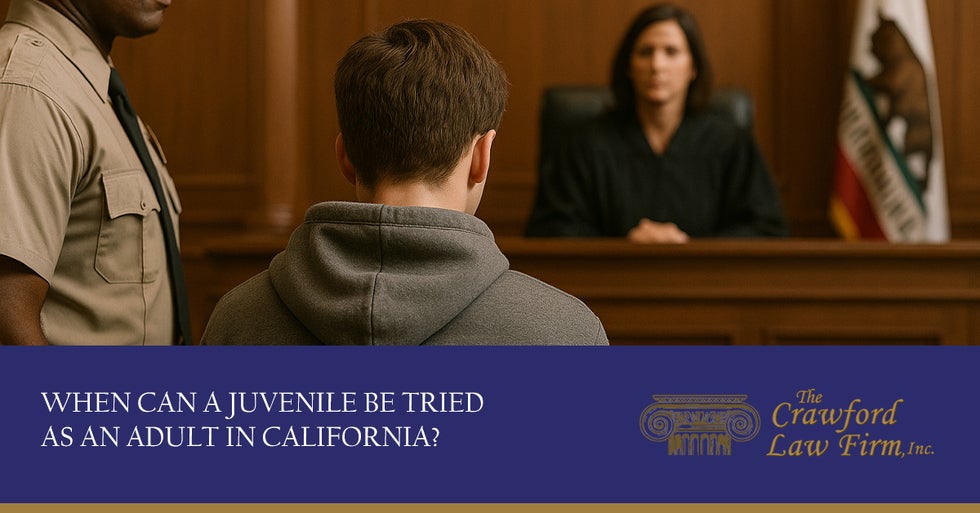
California's Proposition 21 appeared on the 2000 ballot and went into effect the same year. This proposal was known as the “Juvenile Crime Initiative,” and it made many changes to state law, including increasing punishment for gang-related offenses and violent offenses committed by children under 18.
Proposition 21 also changed the rules for trying juveniles in adult criminal court. The initiative mandated that juveniles as young as 14 who commit certain offenses be automatically tried in adult court.
This law, which was the subject of much controversy and opposition, was ultimately upheld by the California Supreme Court, leading to a new set of standards for trying juveniles in adult court. However, some of these standards were later amended.
Juvenile Cases Handled in Adult Criminal Courts
Generally for kids under 12, the juvenile courts do not have jurisdiction with very limited exceptions for murder or violent crimes involving force, duress or menace.
The courts have jurisdiction over children between the ages of 12 and 17 who are accused of violating any local, state, or U.S. criminal law.
The benefit of having a case handled in juvenile court is that they are designed to rehabilitate the youth without ruining their future.
When prosecutors want harsher punishment, they can seek to transfer a case to adult criminal court. Transferred cases introduce the possibility of adult prison. Yet, they provide additional protections, such as a jury trial and the right to a bail hearing.
The cases that can be transferred to adult courts include the following:
Serious Felonies
Children who were 16 or 17 when they allegedly committed the following serious felonies may be tried in adult court:
- Murder and attempted murder
- Voluntary manslaughter
- Arson that causes great bodily injury or burns a dwelling house
- Robbery
- Rape, sodomy, oral copulation, or lewd acts using force, threats, or duress
- Sexual penetration of a minor using force or threats
- Kidnapping for ransom, robbery, or sexual assault
- Kidnapping that causes bodily harm
- Assault with a firearm, destructive device, or use of force likely to cause great bodily injury
- Firing a firearm into an occupied building
- Manufacturing illegal drugs
- Violent felonies
- Violent felonies against an elderly or disabled person, causing great bodily injury
- Escape from juvenile detention or confinement using force or violence
- Torture
- Drive-by shooting
- Aggravated mayhem
- Carjacking using a dangerous or deadly weapon
Prosecutors do not need to prove that the offense occurred. Instead, they only need to charge the juvenile with one of these offenses and file a transfer motion to start the transfer process.
Process for Transferring Juvenile Criminal Cases
When the California Supreme Court reviewed the changes implemented in Proposition 21 and the later Proposition 57, one of the primary concerns at play was the automatic nature of juvenile case transfers. After the Court's decision, the state amended its transfer statute to allow judicial review before transferring juvenile cases to adult court.
Prosecutors must file a motion to transfer a case. In response, the probation department prepares a report for the juvenile court describing the accused's behavioral and social history. The juvenile court judge reviews the motion and report to examine the following:
- The accused's criminal sophistication
- The juvenile's prospects for rehabilitation
- The juvenile's criminal history
- The success of prior attempts at rehabilitation
- The severity of the alleged offense
The court balances these factors to determine whether the report contains clear and convincing evidence that the juvenile cannot be rehabilitated in the juvenile court system and must be transferred to the adult criminal court.
If there is no such evidence, the juvenile court retains the case, and the child and their defense lawyer will plead the case before a juvenile court judge.
The High Stakes of Juvenile Criminal Cases
California's juvenile crime laws can push children into the adult court system even when they deserve to remain under the jurisdiction of a juvenile court judge.
If your child has been accused of a serious crime, it is imperative to discuss their charges with a qualified juvenile defense attorney who is willing to advocate for them regardless of the court handling their case. Need help? Contact us.

Comments
There are no comments for this post. Be the first and Add your Comment below.
Leave a Comment